
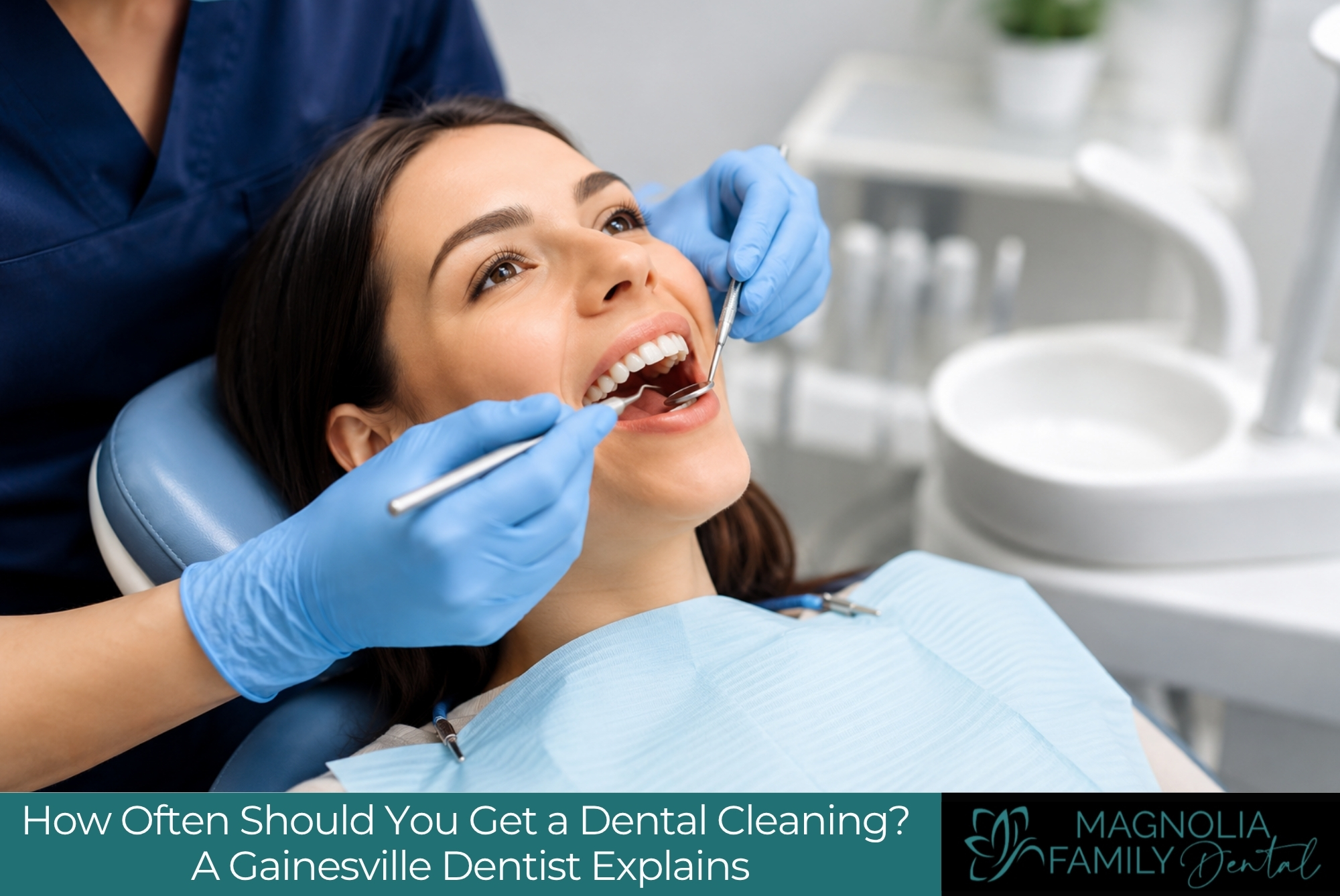
 Routine dental cleanings are one of the most important parts of maintaining a healthy smile. Even with excellent brushing and flossing habits at home, plaque and tartar can accumulate in areas that are difficult to reach with a toothbrush. Professional dental cleanings help remove these deposits while giving your dental team an opportunity to identify potential oral health concerns before they become more serious.
At Magnolia Family Dental, we provide preventive dental care for patients throughout Gainesville and surrounding communities. If you are wondering how often you should schedule a dental cleaning in Gainesville, FL, the answer depends on your individual oral health, medical history, risk factors, and the condition of your teeth and gums.
For many people, dental cleanings approximately every six months are appropriate. However, some patients may benefit from more frequent visits based on their periodontal health and other factors.
Why Are Regular Dental Cleanings Important?
Professional dental cleanings are an essential component of preventive dentistry. Although daily brushing and flossing remove much of the plaque that develops on teeth, they cannot always eliminate every deposit.
When plaque remains on the teeth, minerals in saliva can cause it to harden into tartar, also known as dental calculus. Once tartar forms, it generally cannot be removed effectively with ordinary brushing or flossing and requires professional dental instruments.
Regular cleanings can help control plaque and tartar accumulation, maintain healthier gums, reduce the risk of tooth decay, and support long-term oral health.
Plaque and Tartar Removal
Dental plaque is a sticky microbial biofilm that continually develops on tooth surfaces. Effective brushing and interdental cleaning help disrupt plaque, but areas between teeth, around the gumline, and near dental restorations can be particularly challenging to clean.
Professional dental cleanings allow a dental hygienist or dentist to remove plaque and hardened calculus from these difficult-to-reach areas.
Supporting Gum Health
Plaque accumulation along the gumline can contribute to inflammation of the gingival tissues. Early gum inflammation, commonly called gingivitis, may cause symptoms such as redness, tenderness, swelling, or bleeding when brushing and flossing.
When appropriate preventive care and effective oral hygiene are established early, gingivitis can often be reversed. Untreated inflammation, however, can progress in susceptible individuals to periodontitis, a more serious condition involving the tissues and bone that support the teeth.
Helping Prevent Tooth Decay
Dental cleanings complement daily brushing with fluoride toothpaste and interdental cleaning. Removing plaque helps reduce the bacterial activity associated with acid production and tooth decay.
Your dental visits also provide an opportunity for the dental team to evaluate areas where cavities commonly develop and recommend preventive strategies based on your individual risk.
Monitoring Changes in Your Oral Health
Preventive dental appointments are about more than simply cleaning your teeth. They also allow dental professionals to monitor changes involving your teeth, gums, bite, existing restorations, and other oral structures.
Depending on your needs, a dental examination may identify concerns such as cavities, cracked or worn teeth, deteriorating fillings or crowns, gum disease, or other abnormalities.
Earlier detection can sometimes make dental treatment simpler and more conservative.
How Often Should You Get a Dental Cleaning?
There is no single cleaning schedule that is ideal for every patient. A common recommendation for individuals with good oral health is to receive preventive dental care approximately every six months.
However, modern dentistry increasingly emphasizes individualized, risk-based preventive care. Your dentist may recommend a different interval depending on your oral and overall health.
The Six-Month Dental Cleaning Schedule
Many adults and children benefit from dental examinations and cleanings twice a year. A six-month schedule provides regular opportunities to remove accumulated plaque and tartar and monitor oral health.
For patients with healthy gums, relatively low cavity risk, good oral hygiene, and no significant dental concerns, this schedule may be appropriate.
Your dentist should ultimately determine the interval that best matches your needs.
Who May Need More Frequent Dental Cleanings?
Some patients may benefit from appointments every three or four months rather than every six months.
More frequent professional care may be considered for people with a history of periodontal disease, significant plaque or calculus accumulation, certain orthodontic or restorative needs, persistent gum inflammation, or other factors that make maintaining oral health more challenging.
Tobacco use, dry mouth, certain medications, systemic health conditions, and an individual’s history of tooth decay may also influence preventive recommendations.
A personalized evaluation is the best way to establish an appropriate schedule.
Dental Cleaning vs. Periodontal Maintenance
It is important to understand that not every professional dental cleaning is the same.
A routine preventive cleaning, often referred to as prophylaxis, is generally intended for patients whose gums and supporting periodontal structures are relatively healthy.
Patients who have been treated for periodontal disease may require periodontal maintenance instead.
What Is Periodontal Maintenance?
Periodontal maintenance is ongoing professional care for patients with a history of periodontitis. These appointments are designed to help control the bacterial deposits associated with periodontal disease and maintain the results achieved through periodontal treatment.
Because periodontitis is a chronic condition that requires continued management, periodontal maintenance may be recommended at shorter intervals than standard preventive cleanings.
Your dentist can determine whether routine prophylaxis or periodontal therapy and maintenance are appropriate based on an examination and periodontal assessment.
What Happens During a Professional Dental Cleaning?
Knowing what to expect can make your appointment more comfortable, particularly if it has been a while since your last visit.
Although every patient’s needs are different, a routine cleaning appointment generally includes several important steps.
Evaluation of Your Teeth and Gums
Your dental professional may begin by examining your teeth and gum tissues. Periodontal measurements may be taken when appropriate to evaluate gum health and identify areas that require closer attention.
Plaque and Tartar Removal
Professional instruments are used to carefully remove plaque and calculus from tooth surfaces and around the gumline.
The amount of buildup varies significantly between patients, which is one reason cleaning appointments may differ in length.
Tooth Polishing
After deposits have been removed, the teeth may be polished to remove certain surface stains and leave the tooth surfaces feeling smoother.
Preventive Recommendations
Your dental team may discuss brushing technique, flossing or other interdental cleaning methods, fluoride use, dietary habits, and other strategies for maintaining your oral health between visits.
These recommendations should be tailored to your individual needs rather than based on a one-size-fits-all approach.
What Happens If You Skip Dental Cleanings?
Missing an occasional dental appointment does not automatically mean that a serious dental problem will develop. However, repeatedly postponing preventive care can allow plaque, tartar, cavities, or gum inflammation to progress without being detected.
Tartar Can Continue to Accumulate
Once plaque mineralizes into tartar, routine brushing generally cannot remove it. The longer professional care is delayed, the more calculus may accumulate in susceptible patients.
Gum Problems May Progress
Gum disease can sometimes develop with relatively mild symptoms, particularly during its earlier stages. Regular dental visits allow your dental team to evaluate the health of your gums and look for changes that may not be obvious at home.
Cavities Can Become Larger
Early tooth decay may not initially cause pain. Without dental examinations, a cavity may continue progressing until a larger portion of the tooth is affected.
Treating dental disease earlier may help preserve more natural tooth structure and reduce the likelihood of more extensive restorative treatment.
How Can You Tell If You Are Due for a Dental Cleaning?
The safest approach is to follow the preventive schedule recommended by your dentist rather than waiting for symptoms.
However, certain changes may indicate that it is time to schedule an appointment.
These may include visible tartar buildup, persistent bad breath, gums that frequently bleed when brushing or flossing, swollen or tender gums, tooth sensitivity, or simply realizing that it has been longer than your recommended interval since your previous visit.
Dental disease can also exist without noticeable symptoms, so feeling fine is not necessarily an indication that professional preventive care is unnecessary.
How to Maintain Your Teeth Between Dental Cleanings
Professional dental care works best when combined with consistent home oral hygiene.
Brush Thoroughly Twice a Day
Brush your teeth twice daily using fluoride toothpaste. Pay particular attention to the gumline and surfaces toward the back of the mouth that can easily be overlooked.
Clean Between Your Teeth Daily
A toothbrush cannot effectively clean every surface between adjacent teeth. Daily flossing or another dentist-recommended interdental cleaning method can help remove plaque from these areas.
Limit Frequent Exposure to Sugary Foods and Drinks
Frequent consumption of fermentable carbohydrates and sugary beverages can increase the number of acid attacks on tooth enamel throughout the day.
Limiting frequent snacking and choosing water instead of sugary beverages can support better dental health.
Avoid Tobacco Products
Smoking and other forms of tobacco use are important risk factors for periodontal disease and other oral health concerns. Avoiding tobacco benefits both oral and overall health.
Keep Your Recommended Dental Appointments
Preventive care is most effective when it is consistent. Following your personalized examination and cleaning schedule gives your dental team an opportunity to identify changes early and help you maintain your natural teeth.
Why Choose Magnolia Family Dental for Dental Cleaning in Gainesville, FL?
Choosing a dental practice for preventive care is an important part of protecting your smile for the long term.
At Magnolia Family Dental, our goal is to provide comprehensive dental care while helping patients understand the reasoning behind their treatment and preventive recommendations.
Whether you are maintaining an established preventive routine or returning to the dentist after an extended absence, our team can evaluate your current oral health and develop an appropriate care schedule.
If you are looking for a dental cleaning in Gainesville, FL, scheduling an appointment is an important first step toward maintaining healthy teeth and gums.
Frequently Asked Questions About Dental Cleanings
How often should I get a dental cleaning?
Many patients receive professional dental cleanings approximately every six months. However, the ideal frequency depends on factors such as gum health, cavity risk, plaque and tartar accumulation, oral hygiene, medical history, and previous dental disease. Your dentist can recommend a schedule based on your individual needs.
Is getting my teeth cleaned every six months necessary?
Six-month intervals are common and appropriate for many patients, but they are not universal. Some people may require more frequent professional care, while the appropriate interval for others may differ based on their risk assessment. Follow the schedule recommended by your dentist.
Do I still need professional cleanings if I brush and floss every day?
Yes. Excellent home care is essential, but professional cleanings provide benefits that brushing and flossing cannot completely duplicate. In particular, professional instruments are needed to remove hardened calculus.
Can tartar be removed by brushing?
Once plaque has mineralized into calculus or tartar, it generally cannot be removed effectively with an ordinary toothbrush. Professional dental instruments are used to remove these hardened deposits safely.
How long does a dental cleaning take?
The length of an appointment depends on your oral health, the amount of buildup present, whether diagnostic procedures are needed, and the type of cleaning being performed. Your dental team can provide more specific information based on your needs.
Does a dental cleaning hurt?
Routine cleanings are generally well tolerated. Patients with sensitive teeth, significant tartar accumulation, exposed root surfaces, or inflamed gums may experience temporary sensitivity or discomfort. Tell your dental professional if you are uncomfortable so appropriate measures can be taken.
Why do my gums bleed during a cleaning?
Bleeding can occur when gum tissues are inflamed. Plaque accumulation is a common contributor to gingival inflammation. Persistent bleeding should be evaluated because it may indicate gingivitis or periodontal disease.
Can dental cleanings help with bad breath?
They can help when persistent bad breath is associated with plaque, tartar, or gum inflammation. However, halitosis has many potential causes. Persistent bad breath should be discussed with your dentist or healthcare provider so the underlying cause can be evaluated.
What is the difference between a regular cleaning and a deep cleaning?
A routine prophylactic cleaning is generally performed for patients with relatively healthy periodontal tissues. A “deep cleaning” commonly refers to scaling and root planing, a nonsurgical periodontal treatment used when indicated for periodontal disease. They are different procedures performed for different clinical reasons.
How often should children have dental cleanings?
Children commonly receive preventive dental visits at intervals recommended by their dentist based on age, oral health, cavity risk, home care, and other individual factors. Establishing regular dental care during childhood can support lifelong preventive habits.
Should older adults have dental cleanings more frequently?
Age alone does not determine cleaning frequency. Older adults may have factors such as dry mouth, exposed root surfaces, medications, restorations, or periodontal disease that influence their preventive needs. The appropriate schedule should be individualized.
Can pregnancy affect how often I should visit the dentist?
Hormonal changes during pregnancy can affect gum tissues and may increase gingival inflammation in some patients. Maintaining appropriate dental care during pregnancy is important. Patients should tell their dental team that they are pregnant so care can be coordinated appropriately.
What if I have not had a dental cleaning in several years?
Schedule an evaluation rather than feeling that you need to wait until your teeth are causing problems. Your dentist can assess the condition of your teeth and gums, determine what type of cleaning or treatment is appropriate, and develop a plan for ongoing preventive care.
How do I know whether I need periodontal maintenance instead of a regular cleaning?
Patients with a history of periodontitis may require periodontal maintenance following active periodontal therapy. Your dentist will evaluate periodontal pocket depths, gum health, bone support, clinical history, and other findings to determine the appropriate type of care.
Can regular dental cleanings prevent every cavity or case of gum disease?
No preventive measure can guarantee that dental disease will never occur. Professional cleanings, appropriate examinations, fluoride exposure, effective home oral hygiene, dietary habits, and individualized risk management work together to reduce the likelihood and severity of many common oral health problems.
Schedule a Dental Cleaning in Gainesville, FL
Preventive dentistry is an investment in the long-term health of your smile. For many people, professional dental cleanings approximately twice a year provide an effective foundation for preventive care, while others benefit from a more individualized schedule.
The most important question is therefore not simply, “How often should everyone get their teeth cleaned?” but rather, “How often should you get your teeth cleaned based on your current oral health?”
At Magnolia Family Dental, our dental team can evaluate your teeth and gums and recommend a preventive schedule appropriate for your needs.
If it has been six months or longer since your last cleaning—or you are unsure when you should return—contact Magnolia Family Dental to schedule an appointment for a dental cleaning in Gainesville, FL.
Contact Information
Magnolia Family Dental
4121 NW 37th Place
Gainesville, FL 32606
Phone: (352) 373-7361
Website: magnoliafamilydental.com
Appointments: magnoliafamilydental.com/appointments/